ArchivedIn use during Hajj 2026
Morocco3.com
A lightweight, mobile-first information portal on a dedicated domain, opened by scanning the QR code on pilgrims’ identification bracelets.
Context
During the 2026 Hajj season, pilgrims were issued physical identification bracelets carrying QR codes.
The challenge
A printed QR code cannot change, but the information behind it may need to. A common approach was to point codes at third-party link pages or at spreadsheet-style directories of links. I wanted a clear, mobile-friendly destination that could be updated at any time.
The solution
I designed, built and deployed a lightweight website on Carrd, configured the dedicated domain morocco3.com for it, and integrated it with the QR codes on the bracelets. The page was in Arabic and gave pilgrims one place to find key locations, each opening in Google Maps:
- The hospitality service centre
- Pilgrim accommodation
- Hotels
- The Arafat camp
- The Mina camp
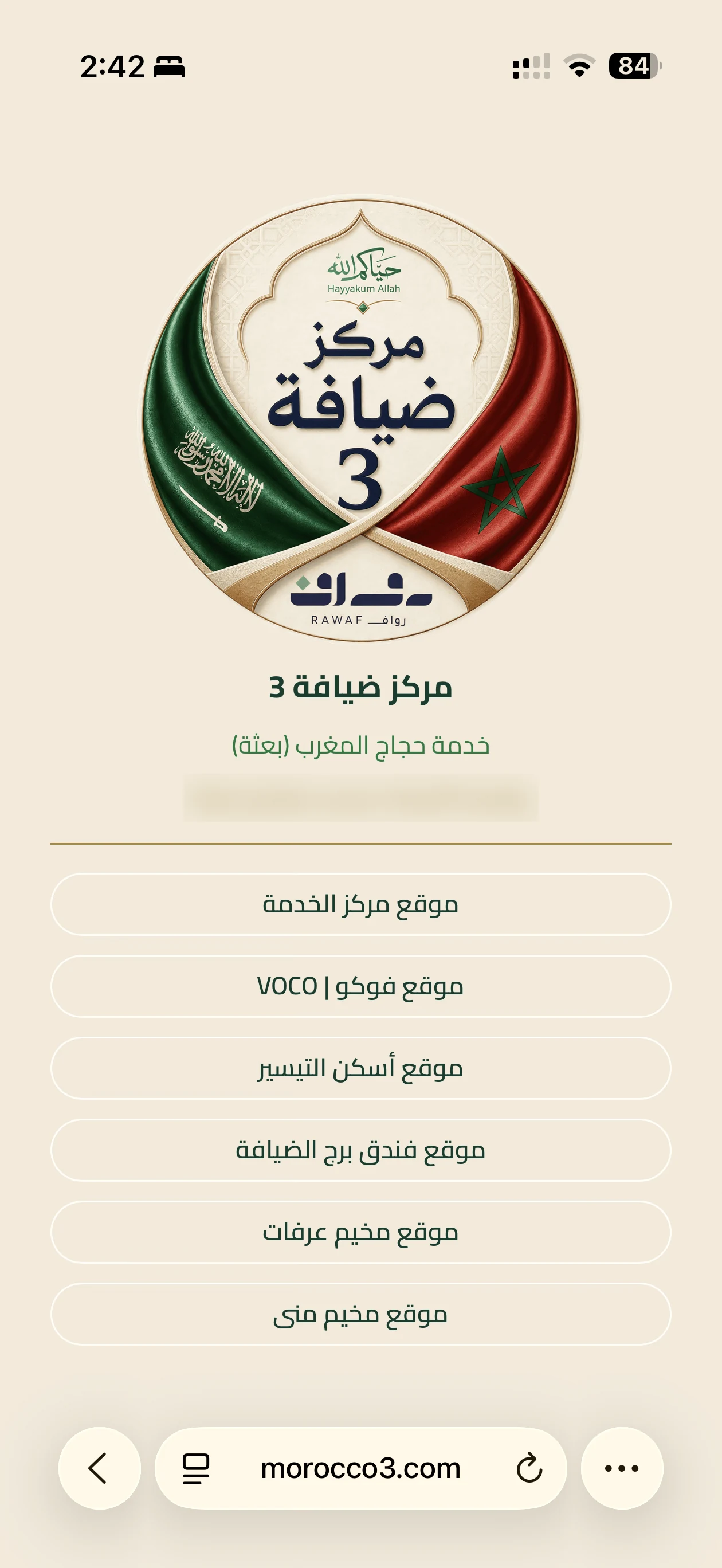
Because the QR codes pointed to a domain rather than to a third-party page, the content behind them could be updated without replacing a single bracelet.
- BraceletEach pilgrim’s identification bracelet carries a QR code.
- DomainScanning it opens morocco3.com, a domain dedicated to the centre.
- InformationA mobile page links to key locations, from accommodation to the Arafat and Mina camps, each opening in Google Maps.
Design decisions
The project was a practical solution designed around accessibility, simplicity and ease of use. The site was deliberately lightweight, to meet an immediate operational need. I considered a more elaborate version but did not build it, because higher-priority operational responsibilities needed my attention.
What it shows
Practical problem-solving during a live season, attention to mobile access, and a simple way to connect a physical identification item with information that can change.